Showing posts with label genetically-modified food. Show all posts

Wednesday, August 22, 2007

Beware the genetically modified cheese!!!

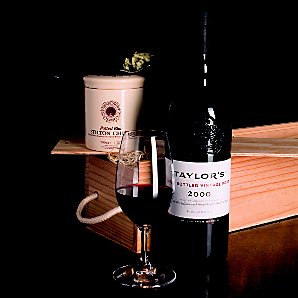
Do you enjoy cheese? On pizza? In a Greek salad? As a crumbly bit of Stilton cheese served with a glass of port?

I love cheese. Cheese was my son's first word. "Chee!" he yells when we enter the cheese section of our favorite grocery store.

Cheese is a pretty cool food. As a microbiologist, I'm fascinated with the way it is made. First we take a whole lot of milk. Milk is rich in a protein called casein, which is dissolved in the fluid of the milk. If you treat milk with rennet, the rennet cuts up the casein protein into smaller chunks that expose hydrophobic parts of the protein. So it precipitates. That is, it comes out of solution and sinks to the bottom of the solution. Cheesemakers call this precipitate curds (and the remaining liquid is called whey). This beginning bit is the same for almost every cheese on the market (yes, even that awful American cheese). The curds are the raw ingredient that all cheese is made from.

Back in the day, rennet came from calf stomachs. (If you want to get an enzyme that breaks down milk products, what better place to look than something that eats milk?). It was a byproduct of veal production. But as you might imagine, getting rennet from calf stomachs is rather expensive (if also a little grisly). So people started to look for substitutes. Most of the substitutes don't work as efficiently or as rapidly as the rennet enzymes from calf stomach preparations, so in the early 1980's, some molecular biologists cloned the rennet gene and expressed it in yeast. Egads! Now, you can make cheese without having to chop up calf stomachs (or calves)! As of 1999, more than 60% of cheese made in the U.S. used this genetically engineered rennet. No doubt by now it is considerably more.

So shouldn't we be excited? This is a win/win/win situation. We get cheaper cheese. Nobody needs to chop up calves. The yeast used to produce the enzyme has been safely used to make bread, beer and wine for millenia. Safe! Cheap! Calf friendly! But due to the unpleasant public relations issue of being a genetically-modified product (cue thunder), most folks keep this a guarded secret. Take this home cheesemaking website:

Liquid Chymostar Classic - 2 oz. This is a high quality rennet, originating from animal sources, but containing no animal product.
Indeed. This has to be recombinant, but they are careful not to say so. Why not be proud? Well, perhaps to prevent the fearmongers from stopping by. So the next time you're enjoying a pizza, know that it's very likely that no calves were carved up to produce your cheese. That it was produced in a manner that is safe. And that you have modern molecular biology to thank for it.

Digg!

Monday, May 7, 2007

Everything is toxic.

This weekend I received an interesting e-mail from a reader, where he asked me why I wasn't worried that BT-corn contains a toxin in it. I wrote in my response to the reader:

Everything is toxic in the wrong dose. Water. Oxygen. So the question we ask isn’t “Is BT safe?” but “Is the dose of BT that you could conceivably get safe?”.
Understanding toxicity isn't just related to BT-corn and GM-food (and I don't want this blog to become all GM all the time). This is of importance to understand everything in your life from X-rays to homeopathic medicine to the environment. So let's do a bit of a toxicology primer (I'll write about long-term health studies in the future).

So what did I mean when I said water is toxic? Was I being facetious? Water can kill you? Well, yes. Recently, a woman killed herself drinking too much water in a water-drinking competition in California. A simplified version of why drinking too much water can kill you, is that you have very specific concentrations of salts (electrolytes) in your blood (and in all the cells of your body). Your body does a pretty good job of keeping those salts at the right concentration. But if you take in a large amount of water too quickly (and we're talking about gallons, here), you essentially dilute out the salt concentration in your blood, and you die. Over longer periods, you can piss out the extra water, to keep the salt concentration within the right range, but if you drink the water too quickly, it can kill you. This is the reason that when you get an IV in the hospital, they inject a dilute salt solution, and not pure water. A pure water IV pushed at a high enough speed would kill you (and even at low speed would likely hurt like shit - any medical folks care to comment?).

Really, everything is toxic. It's much more useful to give a figure of how toxic something is. To do this, we ask the question, how much of compound X (in this case, let's go with water) would it take to kill 50% of the animals that were treated with it. We refer to this figure as the lethal dose 50, or LD50. When looking at things that are not very toxic, we may fail to calculate an LD50, in which case we use the highest dose it is possible to give to an animal, and say that the LD50 is higher than that.

For water, the oral LD50 is greater than 90 mL/kg. In this particular case, it means that they failed to reach a dose of water that killed half their rats, and are calculating based on the highest dose that they were able to give to rats. That means, that if you give a rat 90 mL of water/kg of rat into their stomach, less than 50% of them will die. If you translate this into a human (where the numbers won't be exactly the same, but will be fairly similar), you can give a little over 6L of water to a 150 lb human before 50% of them will die (6 L is about 1.5 gallons). Or around 13.5 lbs of water. That's a lot of water.

Let's compare this to pure BT. Folks who have examined the toxicity of BT have found that when administered orally, that at levels of 10,000 mg/kg, it wasn't toxic. So to compare that to water, 90g of water/kg didn't produce toxicity levels of 50%, and 10g of BT/kg, didn't produce toxicity levels of 50%. Just the fact that folks are unable to get to doses high enough to kill 50% of the animals suggests that these are both fairly safe compounds. Note, I don't say safe, I say fairly safe. There is no absolutely safe compound.

Let's look at a few other compounds that are toxic enough that we can see an LD50. Table salt has an LD50 of 3000 mg/kg (note that smaller numbers mean the compound is inherently more toxic, as it takes a lower dose to kill the animal). So table salt is more toxic than pure BT. And what about the Gabriel Garcia Marquez's favorite poison of lover's, cyanide. It has an LD50 of 5 mg/kg (or the ultratoxic-terror-weapon: botulism toxin, with the incredible LD50 of 0.0000012 mg/kg).

Now back to where I started from, that BT is a toxin. The reason that BT has been engineered into plants is that it kills some types of insects. Meaning that while it is on the same level as water or table salt for toxicity to humans, it's much more toxic to insects. While we share many of the same sensitivities to toxins with rats and mice, we share fewer sensitivities with insects.

So the next time, someone tells you, "BT-corn is toxic!", you can tell them that you know, and that you're not afraid. Everything is toxic.

Digg!

Sunday, April 8, 2007

Insulin in your vegetable oil?

Hot on the heels of the splendidly stupid Spiegel article on BT-corn and bees, comes this new article from the New York Times about genetically modified plants. The author manages to inject a few fairly sensible points before descending into anti-intellectual fear mongering.

The article raises issues that I have commented about elsewhere: that there are real concerns to be debated in the use of genetically modified food (though largely, these issues have been ignored in the popular press - major news organizations prefer the tidier, if uninformed Monsanto vs. Greenpeace debate). I've written a bit of a primer here, for anyone who wants to brush up on what genetically modified food is (in more descriptive terms than "Frankenfoods" that groups like Greenpeace employ).

One of my concerns in the use of genetically modified foods is in the production of pharmaceuticals. Many companies have decided that putting genes into plants is cheaper and easier than growing vats of bacteria under sterile conditions. You may not realize this, but since the 1980s most human insulin that is produced in the pharmaceutical industry is produced in genetically engineered Escherichia coli that contains the human insulin gene. It's cheaper to produce (and more humane) than chopping up pigs, and it's actual human insulin instead of pig insulin (pig insulin is similar, but has slightly different properties).

Now, various companies have decided that it's even easier to produce insulin (and other similar pharmaceuticals) in plants. That way, rather than having to employ microbiologists, and maintain expensive sterile manufacturing plants, they can merely sell seed to farmers, and buy back the genetically modified plants (and purify the insulin from the plant). Sound great? Well, yes. Mostly. It should make many drugs a lot cheaper and safer than they currently are. Who doesn't want cheaper, safer drugs? Farmers will work for less than microbiologists, which cuts costs. And plants have none of the nasty things that you have to worry about in bacteria (for example, the fever inducing LPS molecule). So purification is simpler. Wonderful. But what about contamination of neighbouring crops? What happens when your biopharmaceutical gets mixed in with the regular food supply. This is (and should be) a major concern. Granted, insulin is probably not one to worry too much about, but what about blood thinners and painkillers? Clearly, we need to ensure that these plants don't find their way into the food supply. How to do this? From the New York Times article:

“I don’t think that engineering plants for pharma is a bad idea, with two caveats,” Professor Ellstrand said. One, he says he thinks that planting should be done in greenhouses rather than in open fields. “The other issue is food,” he said. “Why do we have to do this in food crops? It doesn’t matter what you’re squeezing the compound out of. It could be a carnation, a corn plant or a castor bean.”
I concur. In the case of pharmaceuticals where we know that the active molecule will be bioavailable, let's keep this stuff out of general circulation, because accidents do happen. No one would worry about genetically engineered poplar trees getting into the food supply.

The article continues:
Once the rogue seeds are replanted, could the plants thrive in their new home and possibly overtake native varieties or wild relatives? Could the pharma trait increase in frequency and concentration, until it reaches a “dose” that causes health effects in those who consume it unwittingly? The probability for any one of these situations may be low, Professor Ellstrand said, but the scientific answer to each question is yes.
Well, the probability that umbrellas cause cancer is low, but is it possible? Scientifically, yes. But let's make our decisions based on rational cost/benefit analysis, not merely on what is "possible".

Now the article-writer starts to get a little ridiculous:
But there is some scientific evidence not acknowledged in biopharma risk assessments that casts a dark cloud over this silver lining. For starters, the “system” under discussion is nature, and despite our best efforts it always manages to elude our puny attempts at controlling it.
What does that mean? This evokes a "Jurassic Park"-like scenario, of hybrid canola-Tyrannosaurus rex terrorizing the countryside. We have actually done a lot to manage nature. Have you ever seen anything that looks like a cow in nature? How about a wheat plant? These have been highly managed, and yet very few have escaped and "contaminated" the wild. Reason being, our modifications don't make positive fitness changes to the plant. They make them more commercially valuable, but much less viable in the wild.

And:
Scientists often dismiss the idea that people without technical knowledge can help them make risk assessments. As a result, biotech scientists and regulators have long made safety determinations from within an opaque system of their own design, using only the evidence they accept as valid.
Should we be having plumbers determining health risk of heart drugs? And using data about global-warming that science fiction authors think are valid? What about genetically-modified foods? I think what we want as a society is a well-educated, independent regulatory organization, like the FDA, not a group of parents at a PTA meeting.
But scientific evidence is not a constant, like the speed of light or pi. Especially in biology, where we still know so little, “evidence” is often just a small circle of light surrounded by the darkness of the unknown. Decisions about risk cannot safely be made in a private club that accepts only its members’ notions of scientific evidence.
Oy. What an anti-intellectual load of crap. Yes, decisions about risk can be made by people who accept scientific evidence as valid. The author is basically saying that everyone's opinion on safety matters. This is simply not true. I have no idea how airplanes are built. I should clearly get a voice in saying that I would like the airplanes I travel on to be safe, but I shouldn't be the person deciding which particular rivets should be used in an aircraft (or deciding that any particular airplane is safe - I'm simply not qualified). A safety determination is going to be best made by someone with the education to make it. We just need to ensure that the folks making said decisions are sufficiently independent from the businesses applying for permits to grow this stuff.

(edited for clarity - I wrote this rather late last night)

Digg!

Monday, April 2, 2007

A GM-food primer. Not all GM-foods are created equal...

Last week's furor over genetically modified (GM) plants killing bees got me inspired to write a bit about genetic modifications. It's something I know a little about, as my day job is that of an academic post-doc in one of the larger medical schools in the U.S. I spend my days genetically modifying bacteria so that I can understand better how they work. Doesn't that mean that I'm biased? (I got called an industry stooge for defending GM-plants). Well, perhaps. But I earn so little that I have no money invested in biotech stocks (really, I have very little money invested in anything besides my house), so at least I have no financial horses in the race. And the work I'm talking about isn't really related to my own work. I'm just sufficiently educated in the field that I have a clue.

So, what did the Spiegel article mean when the author accused GM-plants of being responsible for the recent bee die-off? (a claim I debunk here and here). Do we need to worry that all GM-plants are killing bees? Well, no. They were talking about a particular, common modification called BT.

BT stands for Bacillus thuringiensis, which is just the latin name for a particular bacterium that kills insects. People started taking advantage of this bacterium over 70 years ago, by sprinkling dried bacteria onto plants to protect them from insects. (And even today, organic farmers consider this an acceptable pesticide that they are allowed to use). Indeed, the fact that it is a bacterium that only kills insects is of great use to us, as it is totally safe for humans.

Bacillus thuringiensis kills particular insects by virtue of a single protein that it makes. One gene specifies the creation of this protein. If you remove the gene from the bacterium, it no longer kills insects. What genetic engineers have done is to take the gene from bacteria, and place it into plants, particularly corn and cotton. (The insects that afflict corn and cotton growers are particularly susceptible to death by BT). So this one single gene is transferred from B. thuringiensis into corn or cotton, and allows the plant to kill insects that eat the corn or cotton.

Do we need to worry about BT harming people? No. In literally decades of study of B. thuringiensis, it has been shown that pure BT-toxin is no more harmful to people than table salt. You couldn't eat corn fast enough to accumulate enough toxin to give you so much as a bellyache (it is readily degradable in the stomach). And safety studies over the last 15 years have shown that BT-corn behaves no differently than B. thuringiensis sprayed on corn. Really, as much as you can say anything is safe, BT-corn is safe.

What about BT-corn harming bees? Well, folks have looked for this, too. But bees don't eat corn, and they don't pollinate corn. Indeed the dosage needed to kill bees is quite different than that of caterpillars and beetles, and the symptoms are rather different than what has been seen in the bee die-offs seen recently.

But, let's imagine for a moment that BT-corn is responsible for the bee die-off. Is this an indictment of genetically modified food? Not at all, it would be an indictment of BT-corn. There are all kinds of other modifications that people are working on that wouldn't have any kind of effect on insect populations. Take for example, coffee, genetically modified to not make caffeine. Or peanuts genetically-modified to remove the allergens. These are kinds of things that people are working on today, and one wouldn't expect there to be any kind of bad effects to people or plants by making these changes.

What I'm basically trying to say here is, when someone tells you they're talking about GM-food, it makes about as much sense to make general conclusions about it as it does when someone talks about "chemicals". Chemicals range in quality from vinegar to phenol to sulfuric acid. When speaking of the danger posed by these chemicals, there is quite a range of possibilities. So, too, with GM-foods. Each GM-food poses it's own risks and benefits, and current GM-foods, the risks seem rather small and the rewards rather large. I'll post in the future on some of the risks posed by newer GM-foods. But let's take these things on a case-by-case basis, shall we?

Digg!