well worth watching


Pharyngula recently provided a definition of science. While this may seem a rather boring point to pore over, I found myself spending a lot of time thinking about this over the weekend, and I found it exhilarating:
#1: Science is a changing and growing collection of knowledge, characterized by transparency (all methods are documented, and the lineage of ideas can be traced) and testability (prior work can be repeated or its results evaluated). It is an edifice of information that contains all of the details of its construction.I'm going to assert that he missed one very useful definition. Or at least one very important point. Science demands proof. Science requires that its practitioners provide proof for their hand-waving, otherwise you are merely spewing words. If you cannot provide an iron-clad experiment that demonstrates the point you are trying to make, then you are merely working at conjecture.
#2: Science is what scientists do. We have institutions that train people and employ them in the business of generating new knowledge — contributing to that edifice in definition #1 — and we have procedures like the bestowal of degrees and ranks that certify one's membership in the hallowed ranks of science.
#3: Science is a process. It is a method for exploring the natural world by making observations, drawing inferences, and testing those inferences with further experimentation and observation. It isn't so much the data generated as it is a way of thinking critically about the universe and our own interpretations of it.
"Science is more than a body of knowledge; it is a way of thinking. I have a foreboding of an America in my children's or grandchildren's time ... when awesome technological powers are in the hands of a very few, and no one representing the public interest can even grasp the issues; when the people have lost the ability to set their own agendas or knowledgeably question those in authority; when clutching our crystals and nervously consulting our horoscopes, our critical faculties in decline, unable to distinguish between what feels good and what's true, we slide, almost without noticing, back into superstitions and darkness."This is what gives science the power to discern truth from bullshit. This is why science is a candle in the dark. This is why scientists feel so passionately about their work. Science offers us the opportunity to say, "Prove it!" and have some possibility of doing just that.
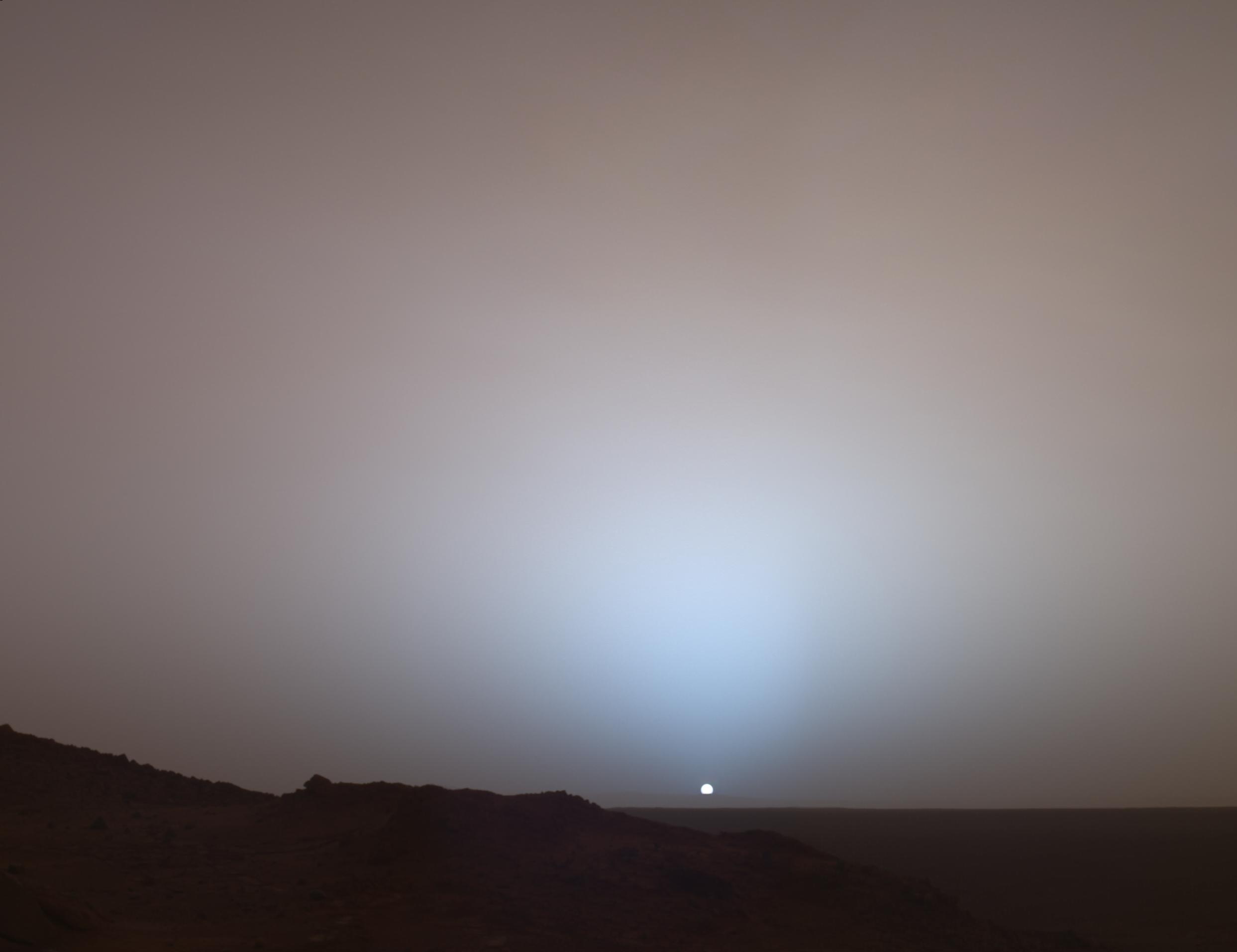
Here's an old shot (2005) from the Mars rover Spirit. It's photos like this why I got involved in science.
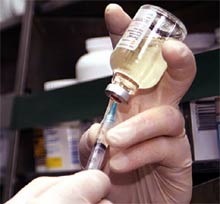
I've posted earlier on anti-vaccine nuttery. The latest news on anti-vaccine lunacy was posted in Orac's blog, Respectful Insolence, today. He's got a great summary on this story of nuttery.
First off, a little background. Since the late 1990s, there have been parents groups that have been arguing that the mercury preservative thimerosal causes autism. The news media has been all too happy to promote their bunk, with articles that say things like: "Epidemiologists say there is no link between vaccines and autism, but parents disagree." It's sad that this is news, because if you substituted it with a sentence like: "Physicists say that there is no link between gravity and forest sprites, but parents disagree" there would be little discussion in the public media.
What are the data that suggest that mercury in vaccines causes autism? Well, autism usually starts to present itself around age 2. And this is an age when children get several different vaccinations. This is also an age when parents start taking toothbrushing seriously for their children. Yet no one is asserting that toothbrushes cause autism (yet). What is the evidence against mercury in vaccines causing autism? There are a number of large trials that show that children who don't receive vaccines, and children who receive vaccines that don't use the mercury preservative thimerosal, get autism at the same frequency as children who do receive mercury-containing vaccines. Case closed. That clearly demonstrates that thimerosal doesn't cause autism. Sadly, there are true believers out there, and it's hard to convince a true believer with data.
The latest in this sad story, is that there are people claiming that the symptoms of Shaken Baby Syndrome are caused by vaccines. What??? Yep, now if you want to hurt your baby and get away with it, you can just claim that those bruises and broken bones are the result of vaccines. This is made possible by the grotesque ignorance of the public at large on how science is done, and how much we know about vaccines. In some other post, I will talk about the real side-effects of vaccines (there are side-effects to most vaccines, but they are less severe than the disease that they vaccinate against). But we can clearly say, you won't break bones or get bruising on your brain from vaccines. Babies get that from abusers. Check out this example of someone who used this excuse to get away with murdering a baby.
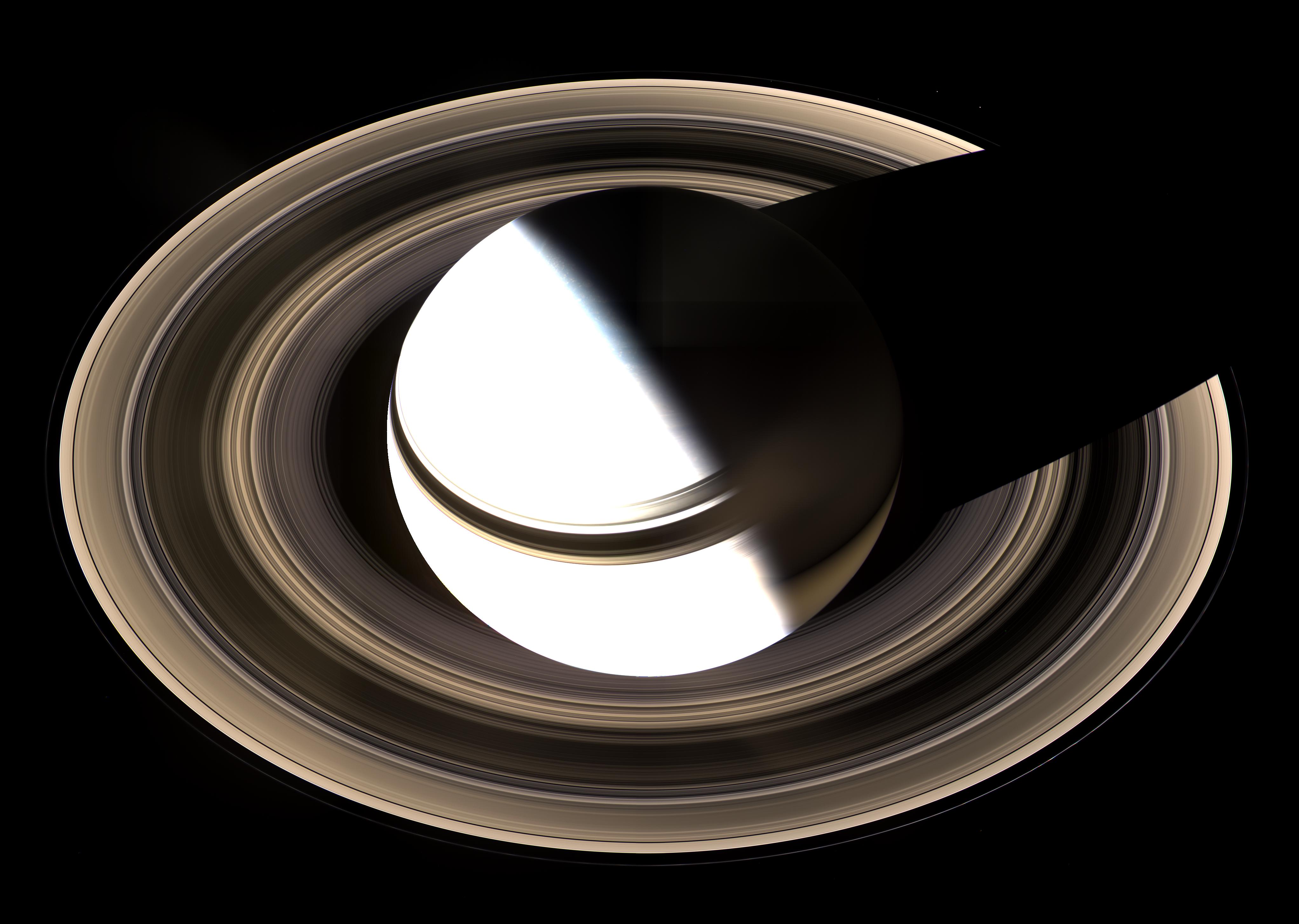
Check out this fabulous image from the Cassini space probe, taken of Saturn in January. It's a composite of multiple over-exposed shots, to see the dark in between the rings. A glorious shot if ever there was one.
The title of this post refers to me. It's an open question.
A recent event at my institution left me wondering more about the Marcus Ross case. A struggling graduate student that I know recently passed his qualifying exam. Let’s call him Phillip. Phillip failed on his first attempt, and some year later, passed on his second. He's mostly a nice guy, but he's really not scientist material. Phillip comprehends molecular biology on the barest levels, in the naïve way that most undergrads do. He's not able to dissect an experiment to determine whether or not he agrees with the discussion of the author. His journal clubs are rote presentation of the paper. In short, Phillip is a disaster. He does not belong in graduate school.
How does this resemble the Marcus Ross case? Marcus Ross is a recently-minted PhD in geology who is a Young Earth Creationist. Many folks in the blogosphere have suggested that he shouldn't have been granted a PhD because he was dishonest, or that he couldn't possibly comprehend his material if he could maintain Young Earth beliefs in the face of all the geological evidence. Many folks have suggested that his degree-granting institution should be mocked for allowing him to use the system.
I'd say both of these cases have one thing in common: the academic system needs graduate students to keep the wheels of science moving. Most of the work in academic labs is done by graduate students and post-docs. There is very little incentive to fail a student after he has gotten into the program. In fact, there is every incentive to keep them there and working, so long as they can get something done. That’s the inherent weakness in the system. And you can’t keep a person in grad school for 7 years and then fail them (or can you?). So people like Marcus Ross and Phillip end up with PhDs.
This is a disservice to everyone but the professor who had a cheap pair of hands for a few years. Society gets another phony authority with some letters after their name. Phillip and Marcus get to work on a career they have little hope of being more than marginally successful (I would argue that Phillip would be better served to be told now he’s a lousy scientist, than to have to spend 10 years in science only to discover that he’d be better off selling jeans at The Gap). It’s the sad truth that as long as institutions aren’t held to any kind of standard, that many of the folks with PhDs after their name will end up being useless at best or quacks at worst. What’s the solution?